

Kia Tika, Kia Pono Conference: Kaitiaki, “Leave it better than you found it”
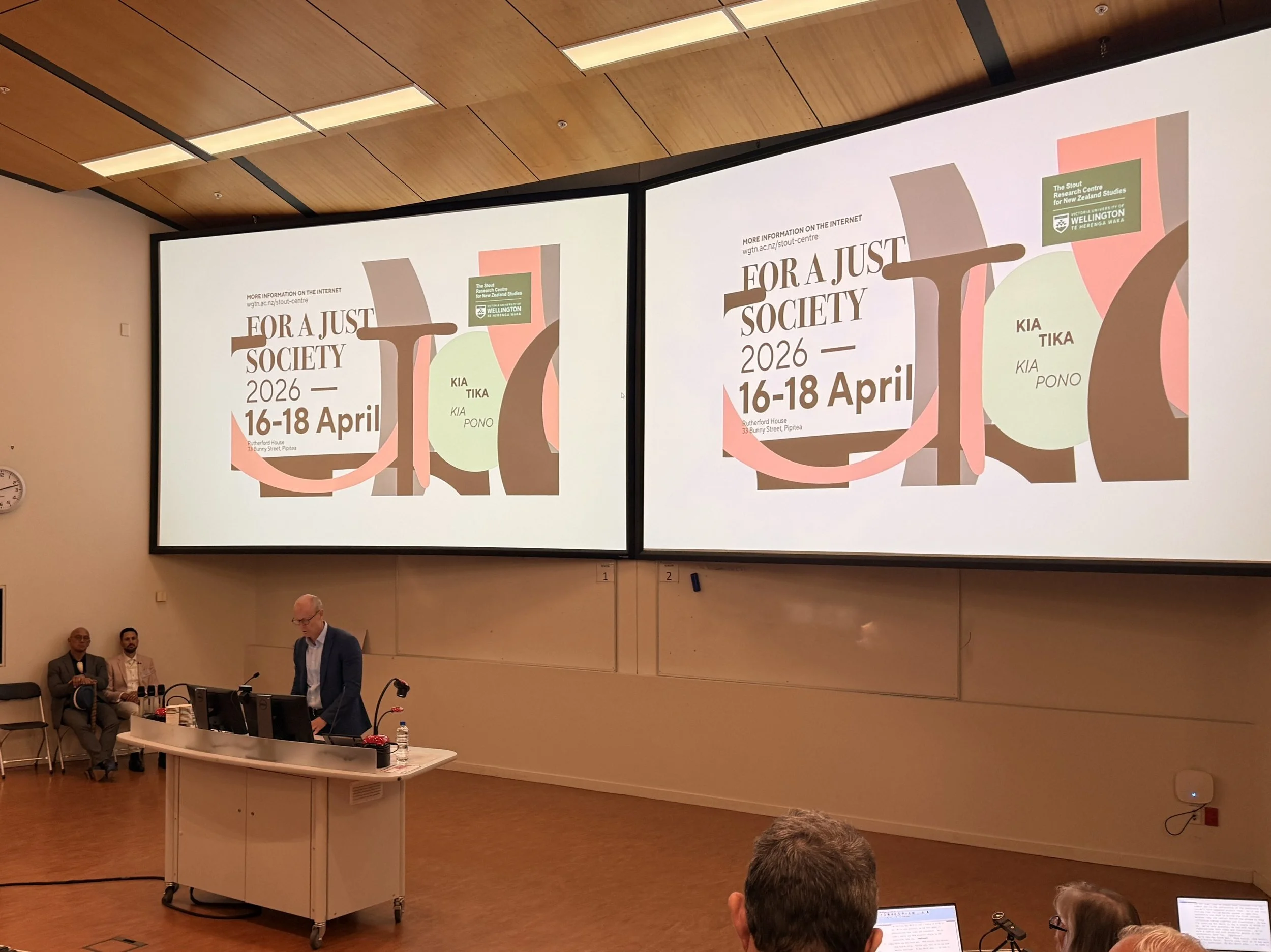
A familiar list of questions about equity, wellbeing and pathways for a just future circulated at the recent conference Kia Tika, Kia Pono hosted by the Stout Research Centre for New Zealand Studies at Te Herenga Waka Victoria University last week.
After Callum Kātene opened the conference, Boyd Scirkovich hit the stage as the Keynote speaker and went straight to the heart of Te Tiriti partnership. He spoke from lived experience that rangatiratanga is not an aspiration on paper, but a force that lives, breathes and sustains our way of life. He challenged the mainstream misconception that settlement marks the finish line, reframing it instead as a milestone on a continuing journey of self-determination, a journey that has always belonged to whānau, hapū and iwi.
The conference was held from 16 – 18 April and a lineup of impressive speakers were invited to deliver their whakaaro (thoughts) on the kaupapa with the goal of moving beyond kōrero and into action for a fairer society.
Also from Te Rūnanga o Toa Rangatira, General Manager Education and Employment Bianca Elkington presented on ‘Kura Toa, an innovative iwi-led education approach’; while Robert McClean and Ashleigh Sagar described the story of Te Awarua o Porirua (Porirua Harbour) and what Treaty-based environmental governance looks like. Attendees also heard kōrero from Ihumātao leader Pania Newton, Te Wānanga o Raukawa CEO Meihana Durie, PSA National Secretary Fleur Fitzsimons and the cofounders of Spatial Justice Aotearoa, Dr Rebecca Kiddle and Dr James Berghan, among others.
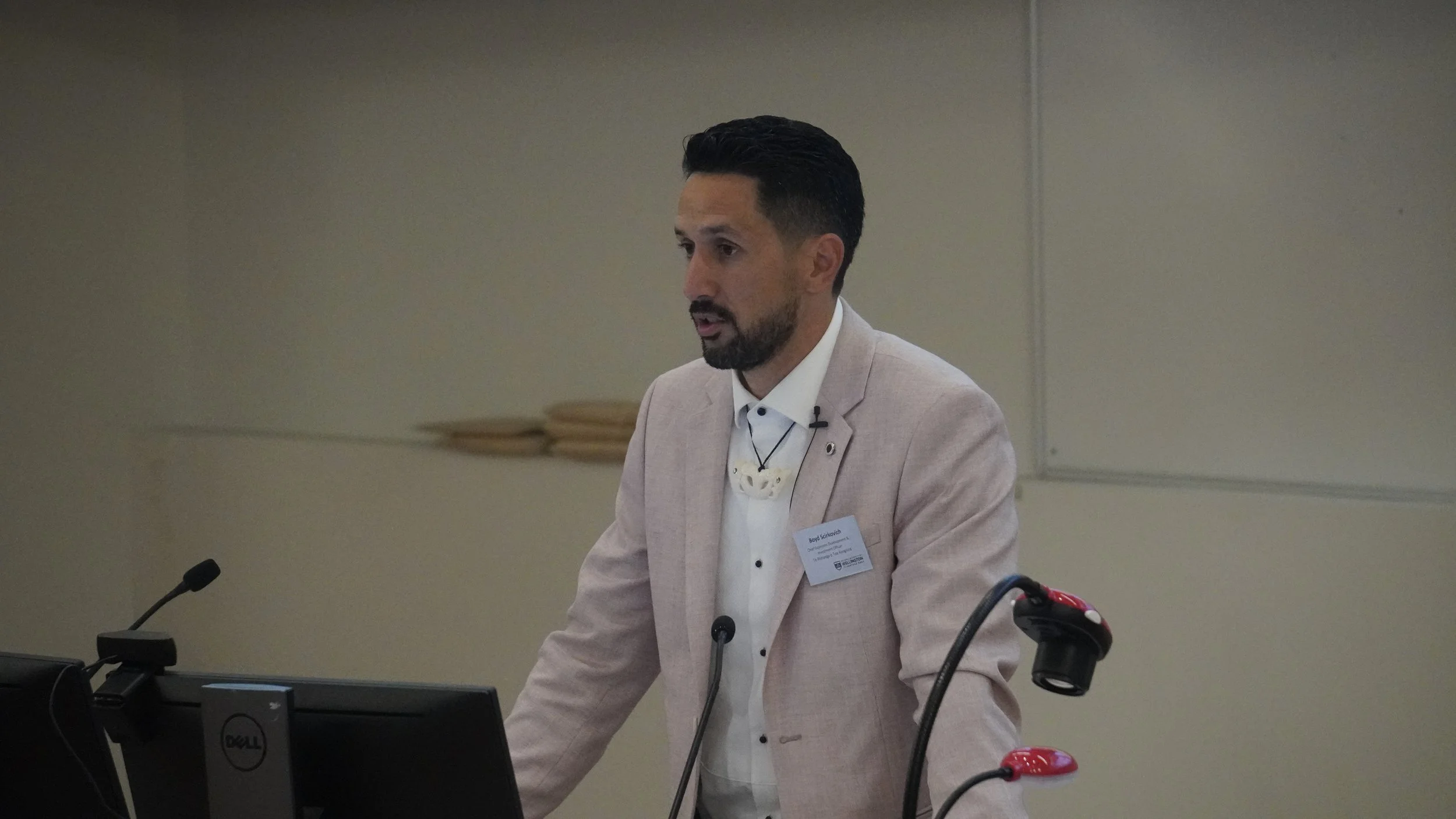
Boyd presented He Kāinga Ururua, Ngāti Toa Rangatira's 2040 Economic Development and Investment Strategy, framing the iwi economy not as a set of financial indicators, but as a living ecosystem, one that can be felt, seen and heard. In this framing, a subtle shift in any part of the system carries compounding effects downstream, and where resilience, connection or cultural grounding is absent, the imbalance makes itself known.
“Ko au te awa, ko te awa ko au, I am the river, the river is me.”
From this relational worldview, Boyd observed that, “You can tell whether a space is healthy by what you see, what you feel and what you hear, or by what you don't see, feel and hear. When we are truly connected to the spaces we inhabit, their health and our own become inseparable and so it’s important for us to foster those spaces to reflect our aspiration of Oranga and Mauri Ora.”
Drawing on values modelled by kaumātua in Takapūwāhia, Boyd anchored his address in a principle both simple and enduring, “Kaitiaki always leave a space better than they found it. They adapt quickly and from time to time where needed, they make things right.” First imparted in an everyday context, this ethic has grown into something larger, an organising logic for our iwi investment and intergenerational stewardship.
Boyd states, "Economic sovereignty can only be achieved by building a strong asset base that fills the well, you can’t pour from an empty well". That requires leadership to be patient and make courageous decisions, to ensure the demands of today don’t limit the opportunities of tomorrow, we need to strike a balance.
Director of the Stout Research Centre Professor Brigitte Bönisch-Brednich said the conference was the natural successor to the Pakukore: Poverty by Design conference held 18 months ago, and the theme ‘for a just Society’ inspired by the speech Callum Katene delivered at the Pakukore book launch last August. By collaborating closely with Te Rūnanga o Toa Rangatira from the earliest planning stages, the Centre ensured the event was anchored in a strong local focus, bringing together a community of thinkers to analyse the current state and shifts in landscapes.
“We chose the April date to start discussions on important topics around a just society in view of the upcoming elections. I’m so very happy about the incredibly positive feedback received for this kaupapa. My personal takeaway is that as a society, we’re well on our way to progress, but it is important to keep analysing what is happening. A conference like this brings us together, strengthening ties and creating new ones,” said Prof Brigitte.
The message of the conference remains incisive: that a just society will not be achieved through symbolic recognition alone, but through structural shifts that allow iwi to exercise rangatiratanga to achieve social, cultural and environmental outcomes.
As the Stout research Centre looks towards publishing these insights, the challenge of Kia Tika, Kia Pono is poised to be an enduring one – a call to do the right thing as Kaitiaki – ensuring that the spaces we occupy are left better for those who follow.