
Reconnecting through kaitiakitanga on Kāpiti Island
A recent motu kaitiaki trip brought together representatives from across the rohe, from local councils and community rōpū. The rōpū travelled to Kapiti Island with Kapiti Island Nature Tours, an organisation whose kaupapa is grounded in sharing the island’s rich history while actively protecting its unique environment.
For Chloe Bryan, a proud uri of Ngāti Toa Rangatira the experience was far more than a day of conservation work. Speaking after the trip, she reflected on how meaningful it was as part of her personal journey of reconnecting with her Māoritanga.
“From the moment we arrived, it already felt different,” Chloe explained. “It wasn’t just about getting to the island, it was about understanding the significance of where we were and why we were there.”
She said the kaupapa of the day became clear early on, to give back to the taiao and contribute to the ongoing protection of a nationally significant taonga.
Kapiti Island Nature Tours itself is deeply rooted in whakapapa and kaitiakitanga. Founded in 1999 by John Barrett and his sister Amo, the business emerged from a desire to share the island with others in a way that honours both its history and environment.
John, who affiliates to Ngāti Raukawa, Te Āti Awa, and Ngāti Toa Rangatira, has strong ancestral connections to Kāpiti Island. His grandmother inherited land on the island from her father, Wi Parata te Kākākura, and held a kaitiaki role, a legacy that continues to guide the values of the business today.
Chloe said this grounding in whakapapa was evident throughout the experience, where storytelling, cultural connection, and environmental care were interwoven into every part of the day.
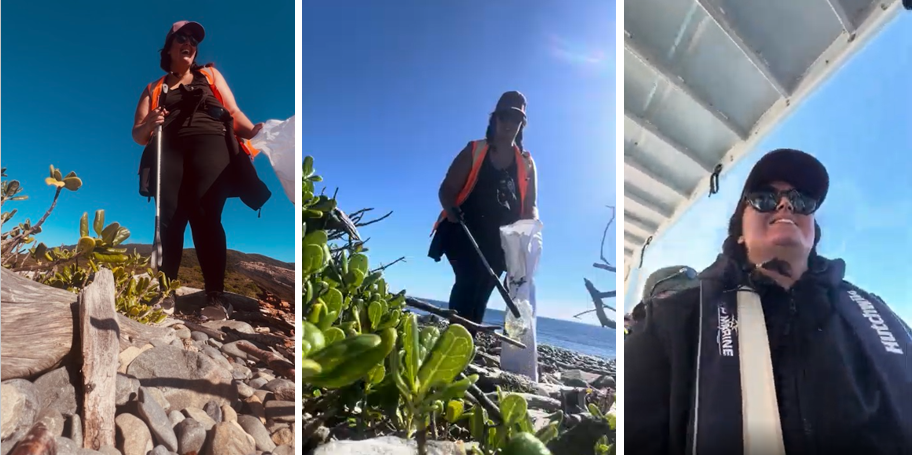
Participants spent several hours traversing the island, collecting rubbish and supporting ongoing conservation efforts across one of Aotearoa’s most significant predator-free ecosystems.
“It was definitely a physical day, I clocked over 9,000 steps,” Chloe said. “But it didn’t feel like work. Being there with people who genuinely care about the taiao made it really special.”
She also acknowledged the sense of shared purpose across the group, noting how collaboration between councils, agencies, and community organisations strengthened the impact of the day.
For Chloe, the trip also held deep personal significance. While she had visited Kāpiti Island as a young child, a story from her koro brought the experience full circle. “He told me he brought me there when I was little and even caught a shark,” she shared. “Coming back as an adult and hearing that story again, it just made everything feel more connected.”
Kāpiti Island holds a significant place in the history of Ngāti Toa Rangatira, having served as a strategic stronghold under the leadership of Te Rauparaha in the early 19th century. Today, it is recognised as one of New Zealand’s most important conservation reserves, with carefully managed access to protect its fragile ecosystem.
Looking back on the experience, Chloe said the day reinforced the importance of connection — to whenua, whakapapa, and community. “Moments like this remind me why I’m on this journey,” she said. “It’s about staying connected and giving back where we can. Being able to do that alongside iwi and others who share that same purpose was really powerful.”
She encouraged others to take up similar opportunities, including multi-day conservation noho on the island. “I would 100% encourage people to put their hand up,” Chloe said. “It’s an experience that stays with you.”