

A space of transition, shaped with care
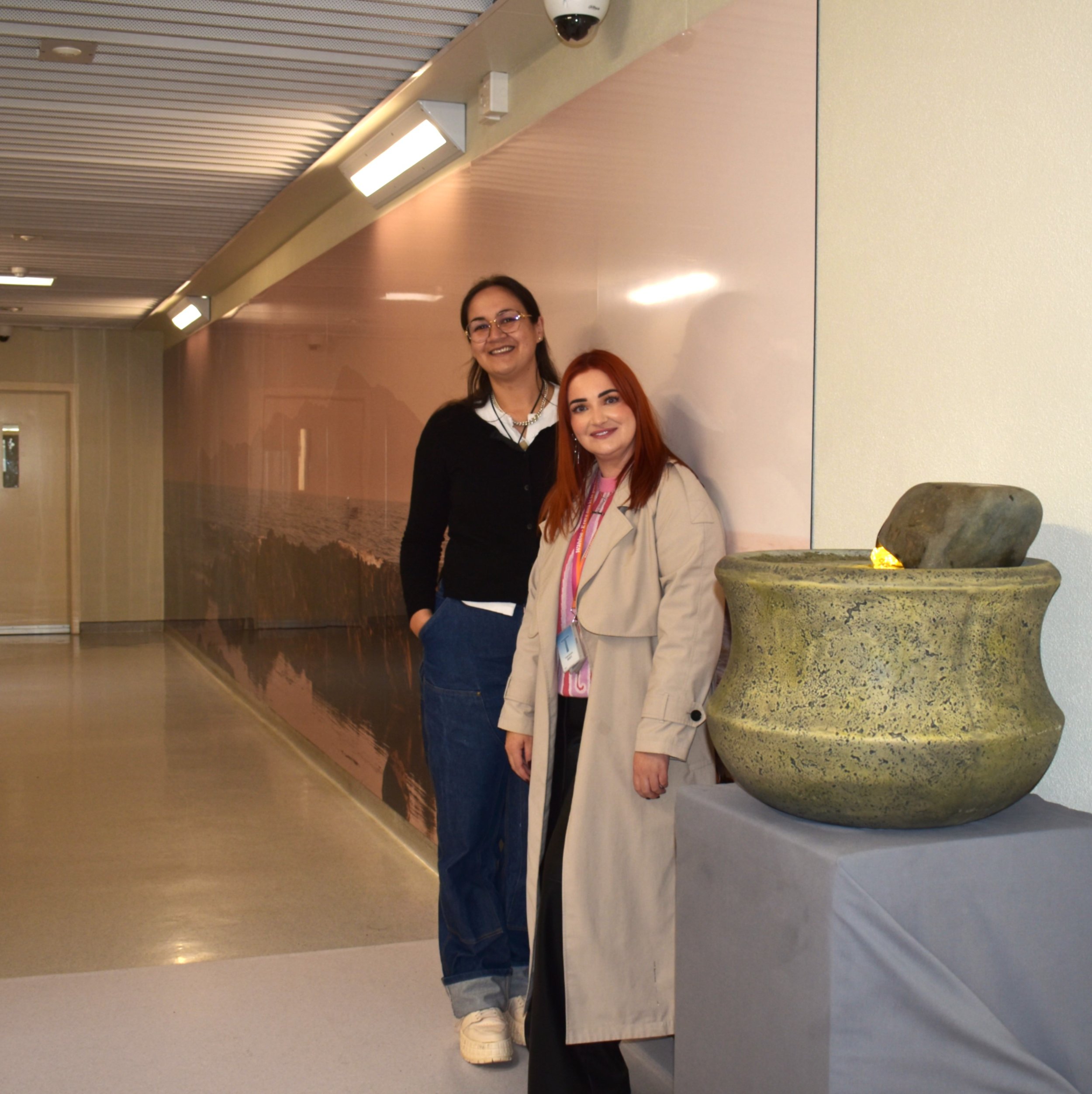
At the start of March, staff and contractors gathered at Arohata Prison to bless the opening of the newly refreshed receiving office, an important entry point within the prison.
The refurbishment brings both practical and meaningful change. A new body scan machine removes the need for invasive searches, while a softer palette of paint helps ease the intensity of the environment. A small waiting room has also been created, offering wāhine a quiet moment to pause as they move through the process of entering the prison.
Running the length of the entry wall is a striking landscape image of Kapiti Island. This visual acknowledgement of Ngāti Toa serves as a reminder to wāhine passing through that there is more beyond these walls, a sense of hope, identity, and connection to place. It replaces what was once a stark orange wall, transforming the space into something far more grounding and human.
The inclusion of this imagery was not without careful consideration. Kapiti Island holds deep cultural and spiritual significance to Ngāti Toa, and its use within the prison setting required appropriate engagement and approval. Te Rūnanga o Toa Rangatira worked alongside Arohata Prison and the Department of Corrections, with formal approval sought through the Kāpiti Island Strategic Advisory Committee. This process ensured the imagery was used in a way that upholds tikanga, protects the mana of the island, and honours its significance to iwi.
At the heart of this decision was a shared intention to strengthen cultural identity, nurture wellbeing, and provide wāhine with a visual connection back to whenua and whakapapa. The imagery serves not just as artwork, but as a quiet reminder of belonging, potential, and life beyond the walls.
The room is further softened by a mauri stone water feature named and gifted by Ngāti Toa Rangatira, Hōkai Nuku, bringing a sense of calm to what can often be a confronting experience.
Gifted by Ngāti Toa Rangatira, and retrieved from Whitireia Maunga. Hōkai Nuku anchors Arohata to the vision of Hōkai Rangi, the Māori strategy within Corrections focused on healing, wellbeing, and reduced reoffending.
While the outcome is powerful, the journey to get here was not without its challenges. In a setting where security is paramount, shifting thinking to recognise that a more welcoming environment can also support rehabilitation is no small task.
Yet this project reflects the persistence of those committed to creating spaces that balance the realities of a prison with the need for dignity and healing.
At the heart of the work is a strong and ongoing relationship with Ngāti Toa, with cultural guidance provided through kaumātua and led by Ashleigh Sagar of Te Mana Taiao. This partnership has ensured the space is not only functional, but culturally grounded and genuine in its intent.
Ashleigh acknowledges the commitment behind the project, noting the determination of those involved. “Chloe has been amazing to work with. She’s the kind of person who, if told no, will come back with solution after solution until a way forward is found. She’s persistent.”
She adds that entering the space for the first time was quite emotional, noting that while the experience can still be harrowing for some, the refurbishment has helped soften the environment.
Chloe Black, Women’s Strategy Lead, shared that this kaupapa was about far more than constructing a new facility within the prison. It represented a true partnership, working together to create meaningful, transformational change for wāhine at Arohata.
“Throughout this journey, Ashleigh and Hanita Dinsdale have consistently supported both this kaupapa and our team at Arohata,” Chloe said. “Our mahi environment is challenging. We understand the history of our system, the impact for wāhine Māori and whānau, and recognise that stepping into this space can be confronting. We are deeply grateful to have been able to create something genuinely meaningful together, and to continue on.”
Projects like this don’t happen overnight. They are the result of years of relationship-building, trust, and a shared vision.
Small but steady steps toward creating environments where wāhine can begin to reset, reflect, and look ahead.