
He Hokinga Whenua
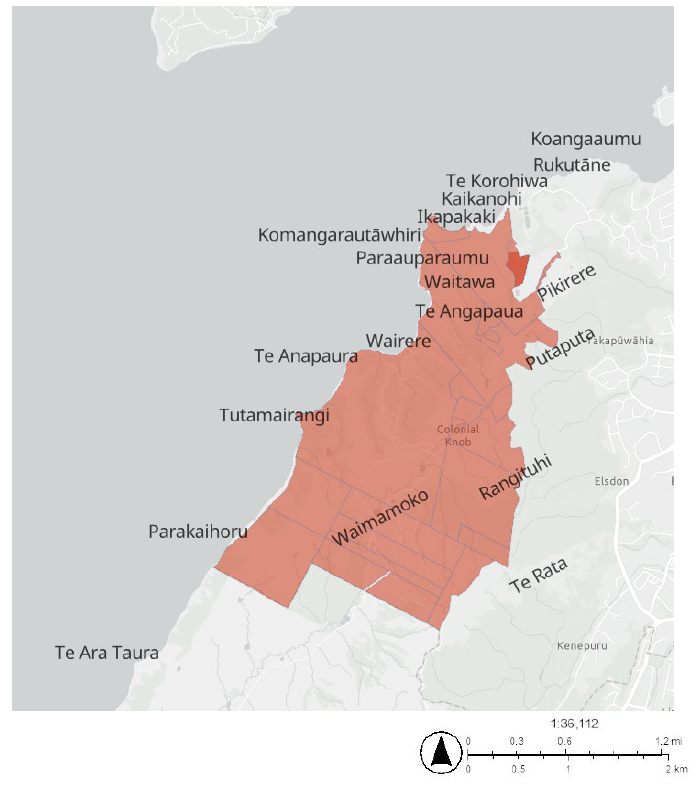
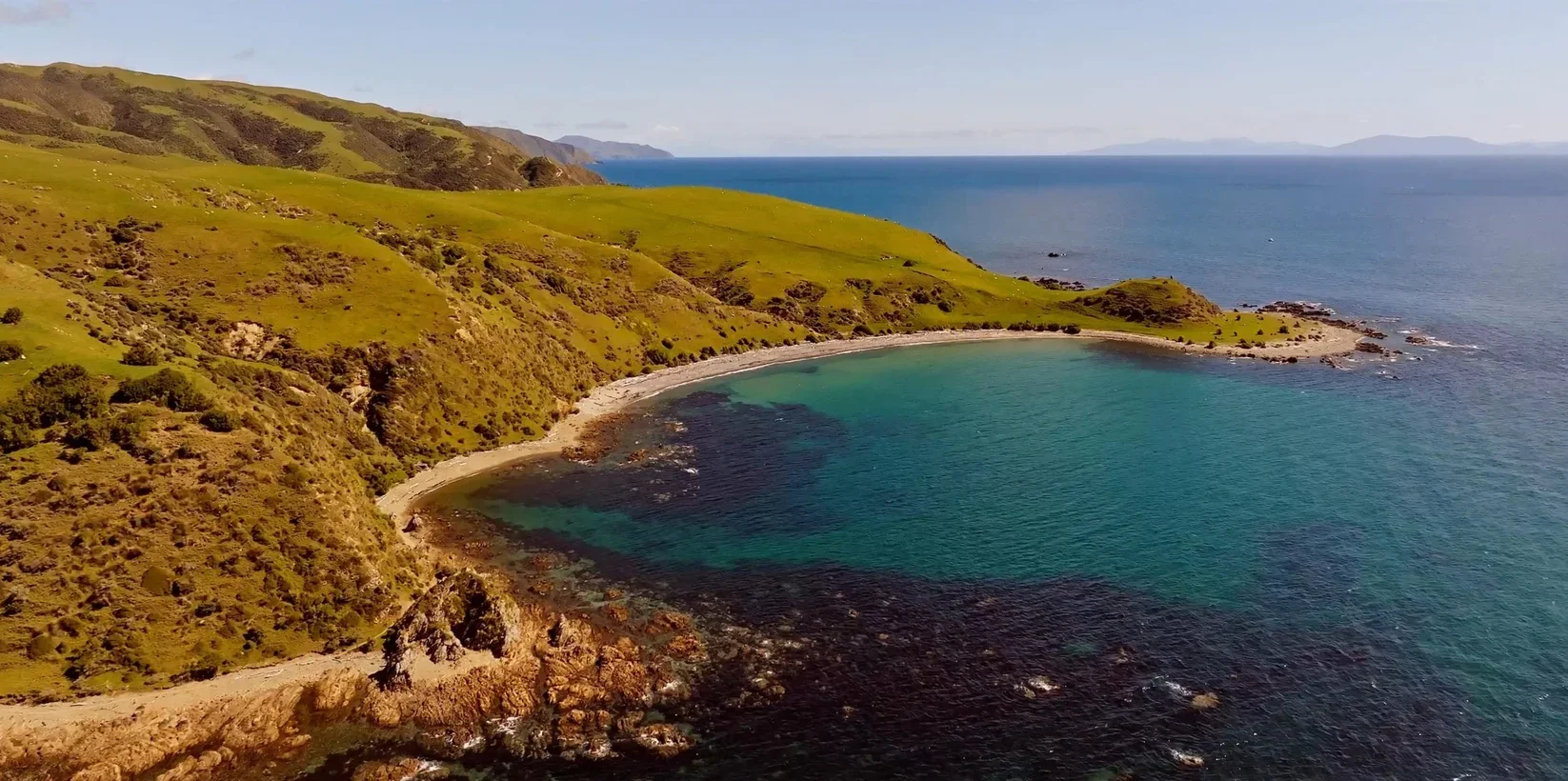
Pikarere Farm is located on the coast between Titahi Bay and Ohariu Valley along the western side of Rangituhi (Colonial Knob). The farm is a significant part of the coast environment with escarpments and deep valleys that reach down to the rocky shores.
Pikarere Farm is a critical part of the rohe and history of Ngāti Toa Rangatira. Along the coast are many significant sites, including pā, urupā, papakāinga and mahinga kai, especially fishing grounds. Along the coast, the sites include Rukutane, Te Korohiwa, Komangarautāwhiri, Wairere, Angapaua, Te Anapaura and Tutamaurangi Pā.
Te Ara Taura is south of Pikarere Farm towards Boom Rock.
The Komangarautāwhiri headland is a significant pā site and urupā. Komangarautāwhiri is said to be the burial place of Te Whatarauihi Nohorua, Rangitakaroro and Pirihira.
The coastal environment is a significant mahinga kai and site of customary fishing and harvesting. Crayfish, pāua, kina, tuere (hag fish), and conger eels are some of the many valued marine species along the coast. The escarpments were a significant habitat for tītī (muttonbirds) and the rocky beach was clustered with kororā (little blue penguin) nesting sites.
Te Mana o Kupe (Mana Island) is located offshore of Pikarere Farm. This island is a significant place for Ngāti Toa Rangatira and was occupied by Ngāti Toa Rangatira, Te Rauparaha, Te Rangihaeata and Waitohi.
There is an undersea bridge which connects Komangarautāwhiri and Mana Island. This bridge is the habitat of the largest giant kelp forest in the North Island.
The land between Whitireia and Te Ara Taura was set aside as part of the Ngāti Toa Rangatira reserve under the 1847 Porirua Deed.
Despite the reservation of the land, early pre-1840 transactions resulted in Crown grants and other awards alienated land at Te Korohiwa. This bay was associated with early whaling stations on the coast during the 1830-1840s.
Te Ara Taura was excluded from the land survey for the Ngāti Toa Rangatira reserve following the 1847 Porirua Deed. Instead of Te Ara Taura, the southern boundary was established at Tutamaurangi Pā (further north). This survey erroneously excluded a large portion of the southern part of the Ngāti Toa Rangatira reserve.
The Komangarautāwhiri (excluding Te Korohiwa) and Wairere blocks were processed by the Native Land Court in the late 19th Century and vested in individual owners. The Wairere and Komangarautāwhiri block inquiries were particularly dubious, with insufficient survey and a lack of ownership certificates.
By the early 20th Century, most of the land between Te Ara Taura and Titahi Bay had been acquired by the Whitehouse family for farming.
In 1925, J.B.F. Stevenson established a farm at Titahi Bay (Te Pene Road area) and acquired Ngāti Toa Rangatira land at Koangaaumu and Tutaeparaikete. Stevenson was a lawyer and active in supporting Ngāti Toa Rangatira in protecting the harbour from degradation and reclamation.
The Crown started a massive housing scheme in Porirua in 1944. Substantial Ngāti Toa Rangatira lands were acquired by the Crown under the Public Works Act for housing and development. The taking of land included the Takapūwāhia, Kenepuru, Pōpōteruru, Rangituhi, Mahinawa, Tutaeparaikete, Onepoto and Koangaaumu blocks.
The Crown also acquired Stevenson land for housing development at Koangaaumu, Titahi Bay and Tutaeparaikete. To compensate the Stevensons, the Crown acquired 2,097 acres of former Whitehouse family land on the south coast. This land was transferred to the Stevensons and formed the basis of the original title for Pikarere Farm today.
The relationships between the Stevensons and the iwi continue today. With the support of the Stevenson whānau, the iwi has continued to access the coast for fishing and customary harvesting.