Learning with Taonga, Learning with Tangata - 15th Wānanga Taonga at Hongoeka Marae
There was something different about the Wānanga Taonga at Hongoeka Marae this year. While the familiar gathering of tauira and sector kaimahi returned, alongside the same course coordinator and pou tikanga from Te Heke-Mai-Raro, the kaupapa felt amplified by the presence of a taonga that invited deeper reflection on responsibility, relationships and care.
Each year, students from Te Herenga Waka Victoria University of Wellington’s Master of Museum and Heritage Practice (MMHP) are welcomed by Ngāti Toa Rangatira to Hongoeka Marae. Over three immersive days, they step beyond lecture halls and galleries into the lived experience of a marae, where tikanga, whakapapa and mātauranga Māori shape how taonga are understood and engaged with.
For Moana Parata (Ngāti Toa Rangatira), Te Papa Tongarewa Kaitiaki Taonga and long-standing pou of the wānanga, taonga are never simply objects – they are living carriers of whakapapa and responsibility for future generations.
“Hongoeka is a good place to learn,” she says. “It’s quiet, it’s safe, and it’s grounded in the priorities of the haukāinga. Our rangatahi need spaces like this to connect knowledge with responsibility.”
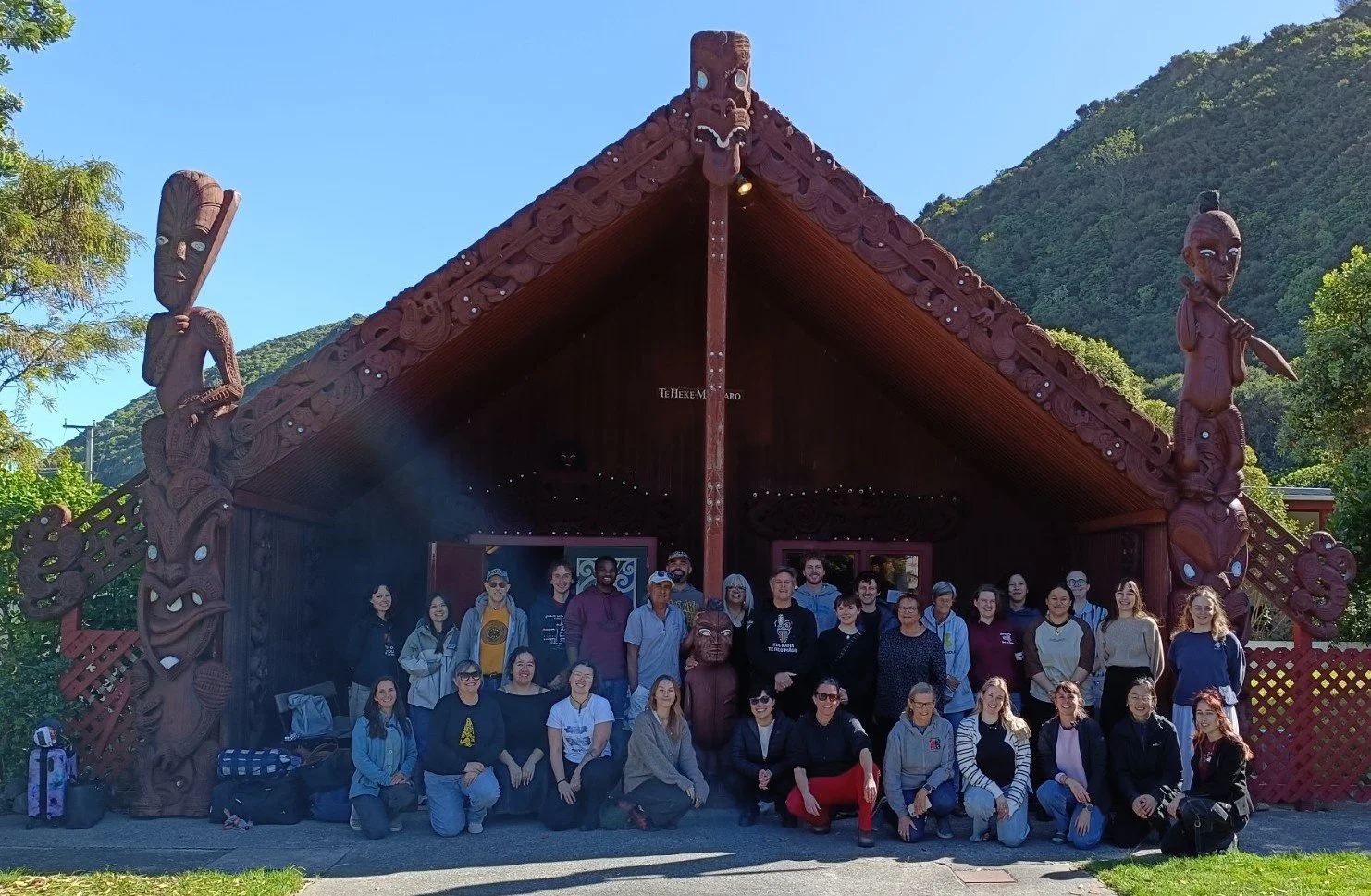
The rōpū for the 15th wānanga taonga consisted of a mixture of kaimahi in the museums and heritage sector, tauira of MMHP and members of Ngāti Toa Rangatira.
The wānanga serves as a vital link for those actively practising traditional arts. After spotting the event in a Ngāti Toa iwi pānui, Matua Wayne Ritani recognised an opportunity for his son Guy and fellow tauira Te Whena Walsh to deepen technical and spiritual foundations of their mahi toi.
As a current whakairo (carving) tauira at Te Wānanga o Raukawa, Te Whena (Ngāti Raukawa ki te Tonga, Ngā Rauru Kītahi) says the noho was about connecting with the living history of the marae and its taonga.
“The knowledge gained and connections made were invaluable. Getting to meet the kaumātua of the marae, the kaiwhakairo and kairaranga who had built the whare tūpuna – an amazing experience,” says Te Whena. “This noho was another step in learning the tikanga, history and broader understanding for my own whakairo practice and personal growth.”
That sense of grounding resonated with tauira attending from across Aotearoa and overseas. This year’s rōpū included recent graduates, sector kaimahi and international students, many of whom were engaging in their first marae-based learning experience.
Wellington Museum Learning Specialist – History, Kylie Parker (Rongowhakaata, Ngāti Porou, Whakatōhea), found that the experience prompted reflection on both professional and personal levels.
“This has really deepened my understanding of the concept of taonga and helped affirm who I am as Māori with my own voice. The kōrero will be something I bring to my team to discuss further, and we’ll be able to implement deeper understandings of taonga into our teaching,” she says.
The programme featured kōrero and panel discussions by experts in heritage studies and taonga conservation, including Dr Te Taku Parai, Callum Katene, Rawiri Faulkner, Te Rauparaha Horomona, Carwyn Jones, Moana Parata and Jamie Metzger, among others. Together, they unpacked what partnership looks like in practice – particularly when institutions work alongside iwi in caring for taonga.
Course coordinator Professor Conal McCarthy noted that this year marked 15 years of MMHP students attending the wānanga, a milestone underscoring the strength of the relationship between the university and Ngāti Toa Rangatira.
“Experiential learning like this helps ground ideas that can otherwise remain abstract,” he says. “Students leave with a deeper understanding of what working with Indigenous communities really requires.”
MMHP student Hayden McWha from Ōtautahi Christchurch valued the emphasis on whakapapa and resisting the ‘one size fits all’ approach to taonga interpretation.
“Coming up from the South Island, I’ve learned perspectives of Ngāi Tahu when it comes to their taonga, and now getting the opportunity to hear the Ngāti Toa perspective – it’s made me realise there is a lot more to learn about tikanga and kawa surrounding taonga which can differ from iwi to iwi,” he says.
As the wānanga concluded with poroporoaki, participants departed with more than academic insight. They left with a renewed understanding that heritage work is ultimately about people – nurturing relationships, honouring tikanga, and ensuring that when future generations encounter taonga, they see themselves reflected within them.
Moana will continue to advocate for strong custodianship of taonga, encouraging opportunities for students to learn through diverse marae experiences. Ultimately, Moana's hope is that the mātauranga shared through the wānanga continues to be carried forward by rangatahi and future practitioners.
“Our kids need to know who they are. We share our whakapapa to the world, but we also live to see it carried by our rangatahi. I’m going to be that for my own mokopuna, they will know everything about this whare,” promises Moana.
That same principle came into focus during the wānanga with the arrival of a very different kind of taonga – a newly rediscovered Resolution and Adventure medal, welcomed onto the marae under tikanga and prompting conversations about care, context and partnership on Ngāti Toa Rangatira whenua. Its journey is explored in an accompanying story that will be published soon.