
Living Art, Living Whakapapa: Land, Women and Rangatiratanga at Toi MAHARA
An exhibition currently showing at Toi MAHARA in Waikanae offers a refreshed model of how taonga and contemporary art can sit side-by-side. Land, Women and Rangatiratanga | Whenua, Wāhine, Rangatiratanga, curated by Kohai Grace (Ngāti Toa Rangatira, Te Ati Awa ki Whakarongotai, Ngāti Raukawa ki te Tonga, Ngāti Porou), celebrates two distinguished wāhine rangatira of Kāpiti who signed Te Tiriti o Waitangi to affirm their authority over the land.
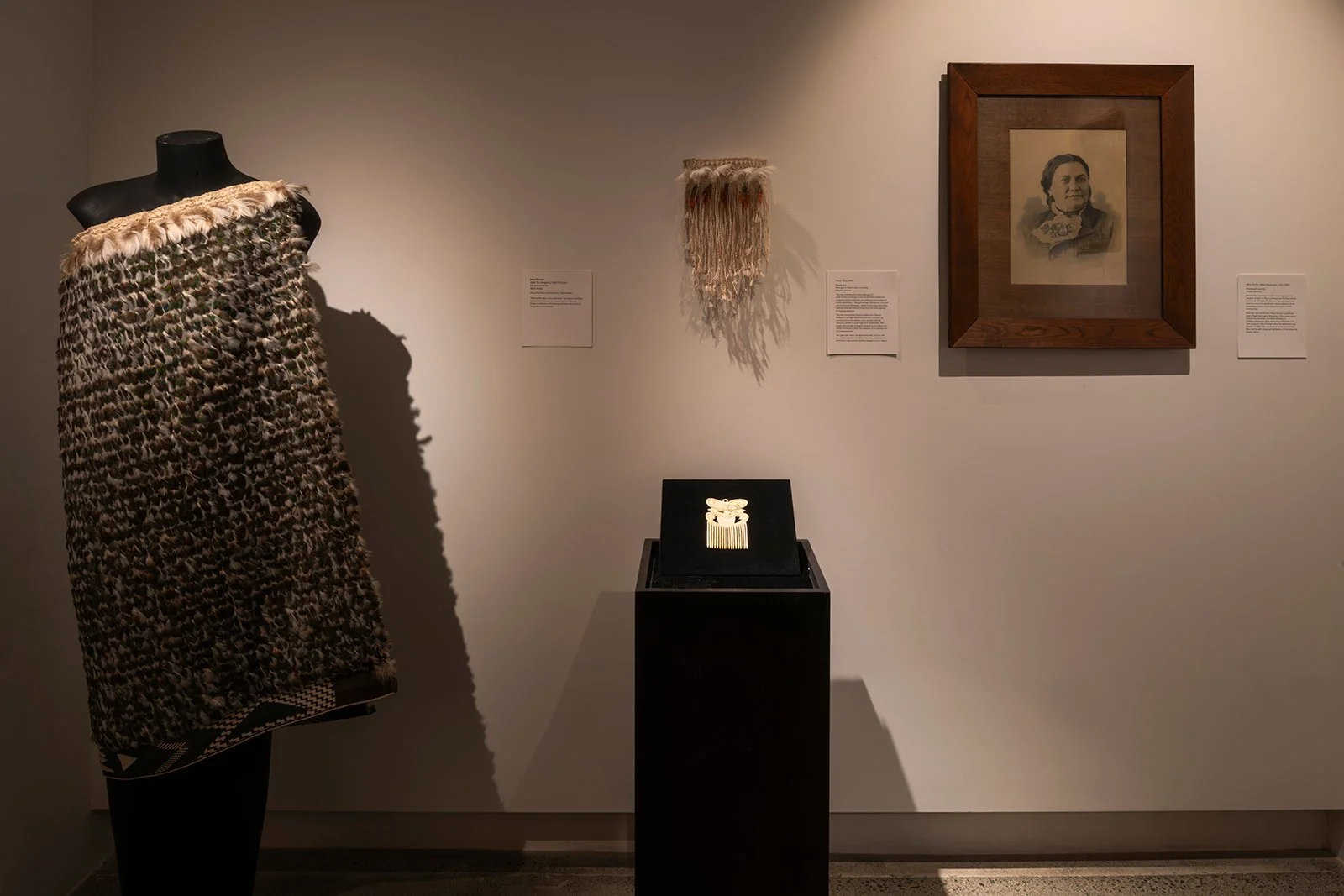
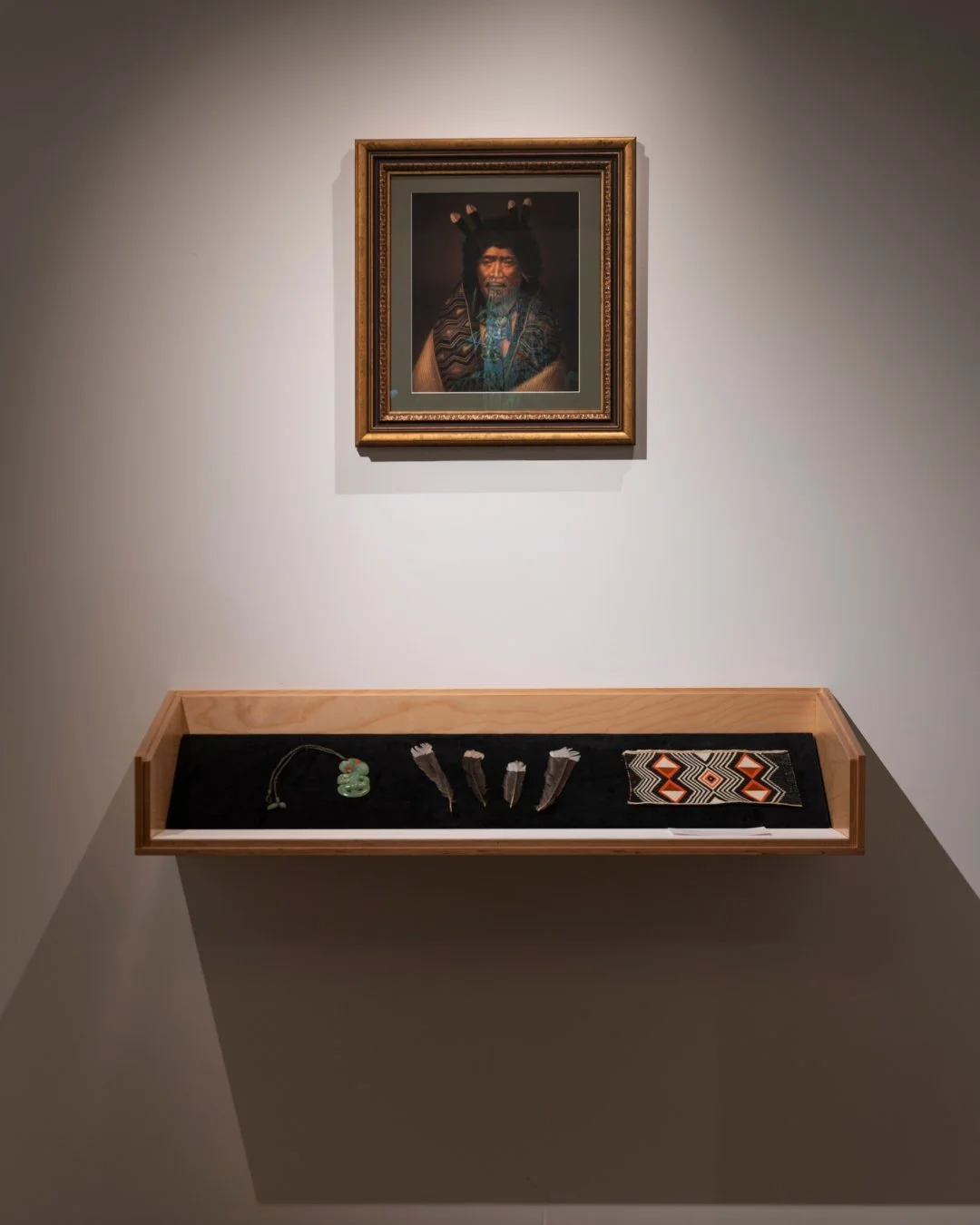
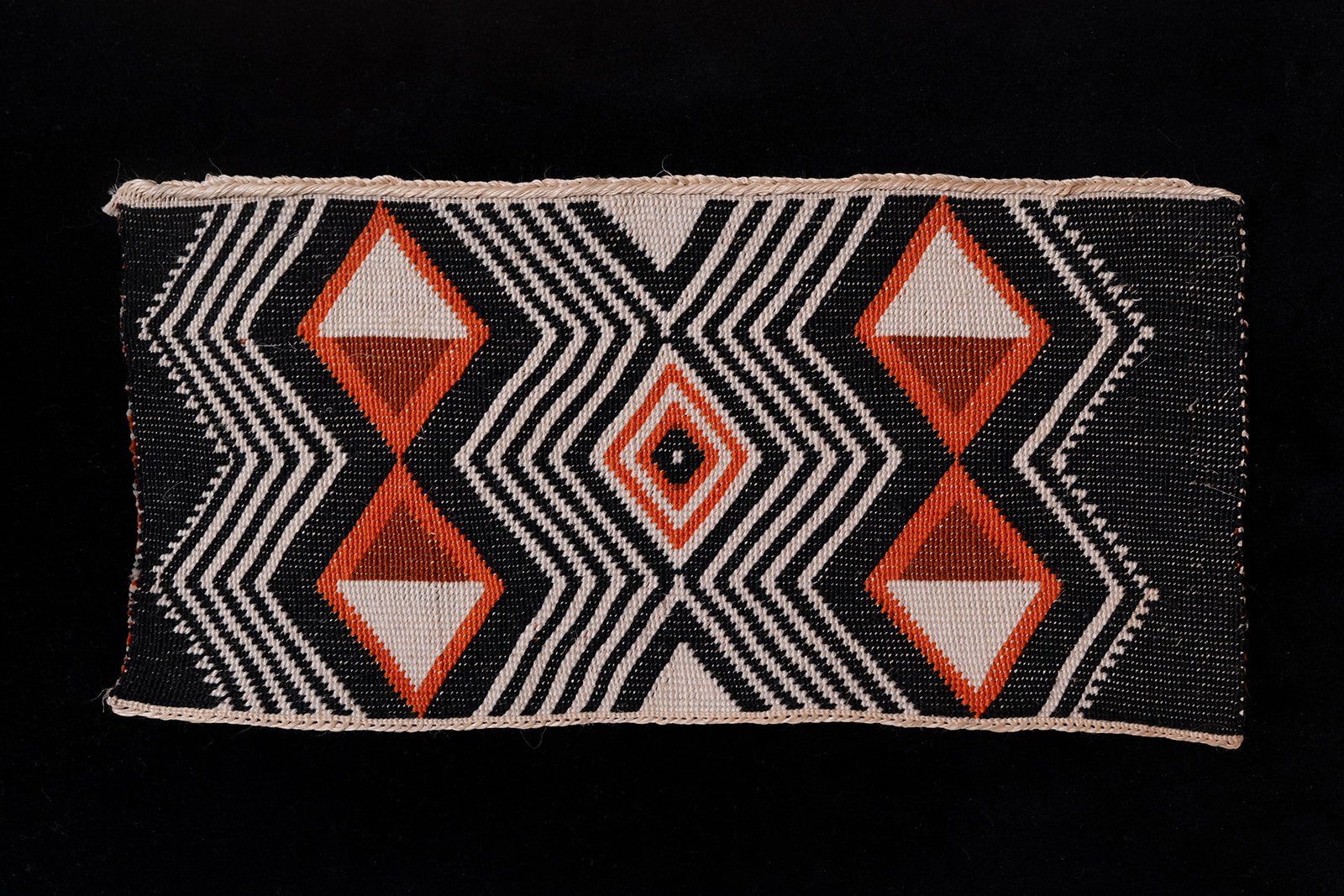
Kahe Te Rau-o-te-Rangi and Te Rangitopeora were prominent, influential and powerful leaders in their time - and their living legacy still permeates through to the minds of their uri and all who learn the history of the area. Rather than sourcing ancestral artifacts from museum vaults, the taonga on display of Kahe and Topeora come directly from the private collections of the Pomare and Bevan whānau. One of them, belonging to Te Rangitopeora, are the four huia feathers displayed under a portrait of her wearing them as head dress (titihuia). In the portrait, she also wears her kaitaka cloak - which Ōtaki weaver Ezra Bevan, as a descendent of Te Rangitopeora, has drawn from to make a tāniko piece resembling the patterns of the kaitaka cloak and acts as a predecessor to the kaitaka he has started to make.
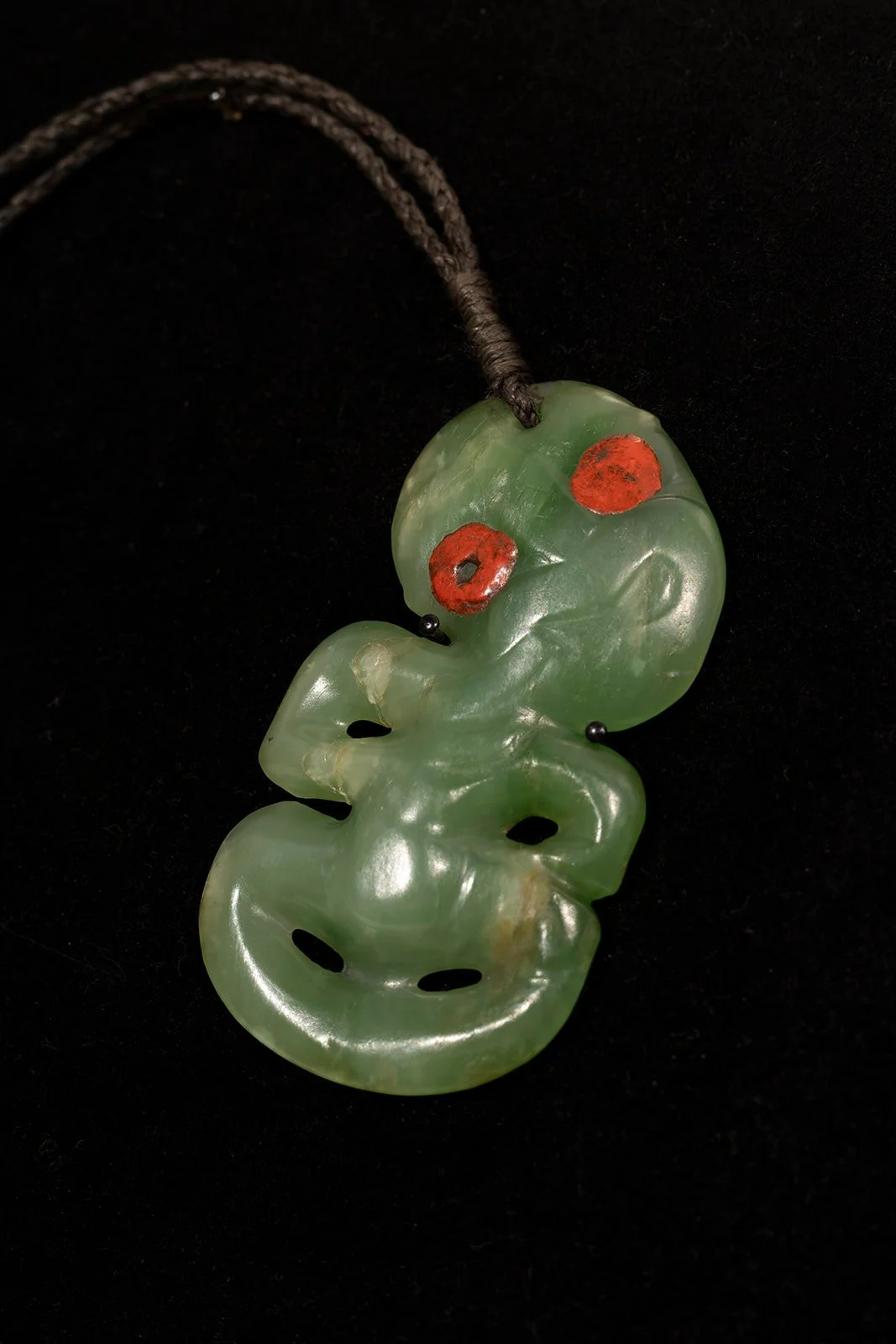
Other taonga of Te Rangitopeora in the exhibition are a hei tiki, a whalebone taiaha and a kahu huruhuru (feather cloak), each with narratives provided by exhibition writer, Miria Pomare.
Of Kahe te Rau o te Rangi, there is a very distinctive whalebone heru. One of her descendants, Kere Pomare, has responded to this with her neck adornment piece made of muka and kākā feathers called ‘Tāhei Muka’. Whale pots used at Kahe’s whaling station on Kāpiti Island sit beneath Himiona Grace’s video footage taken on Kāpiti where the station was located.
Kairauhī Toi, Kohai Grace, explains that unlike Te Rangitopeora, there is no physical photo or portrait of Kahe te Rau o te Rangi.
“I think of her hei tiki, called Kai Arero, as being that image of her, so I call the tiki ‘Kahe’. She has an amazing, I’d say, profound presence in the exhibition. I watch people staring into the Tangiwai stone captivated by her mauri,” says Kohai.
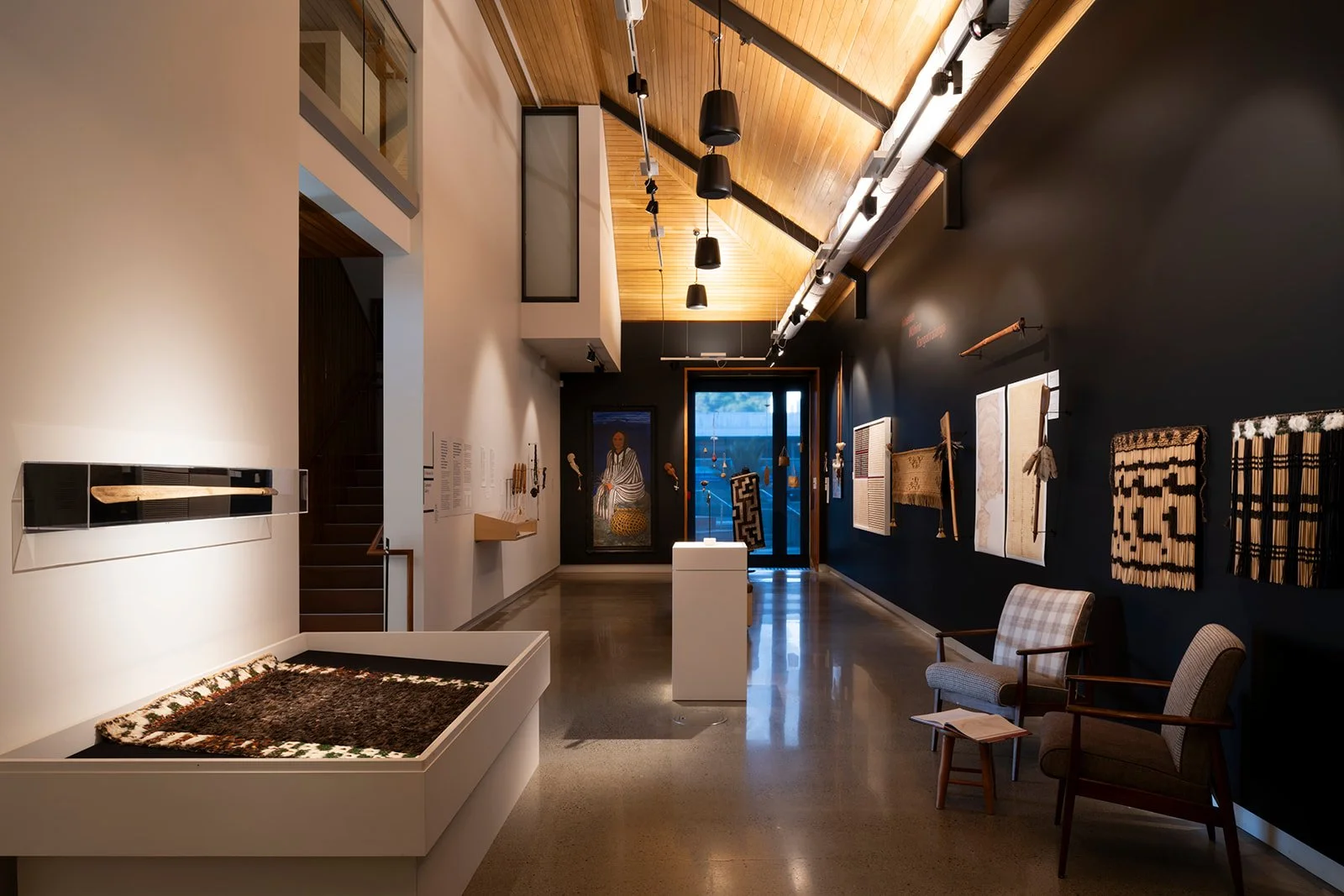
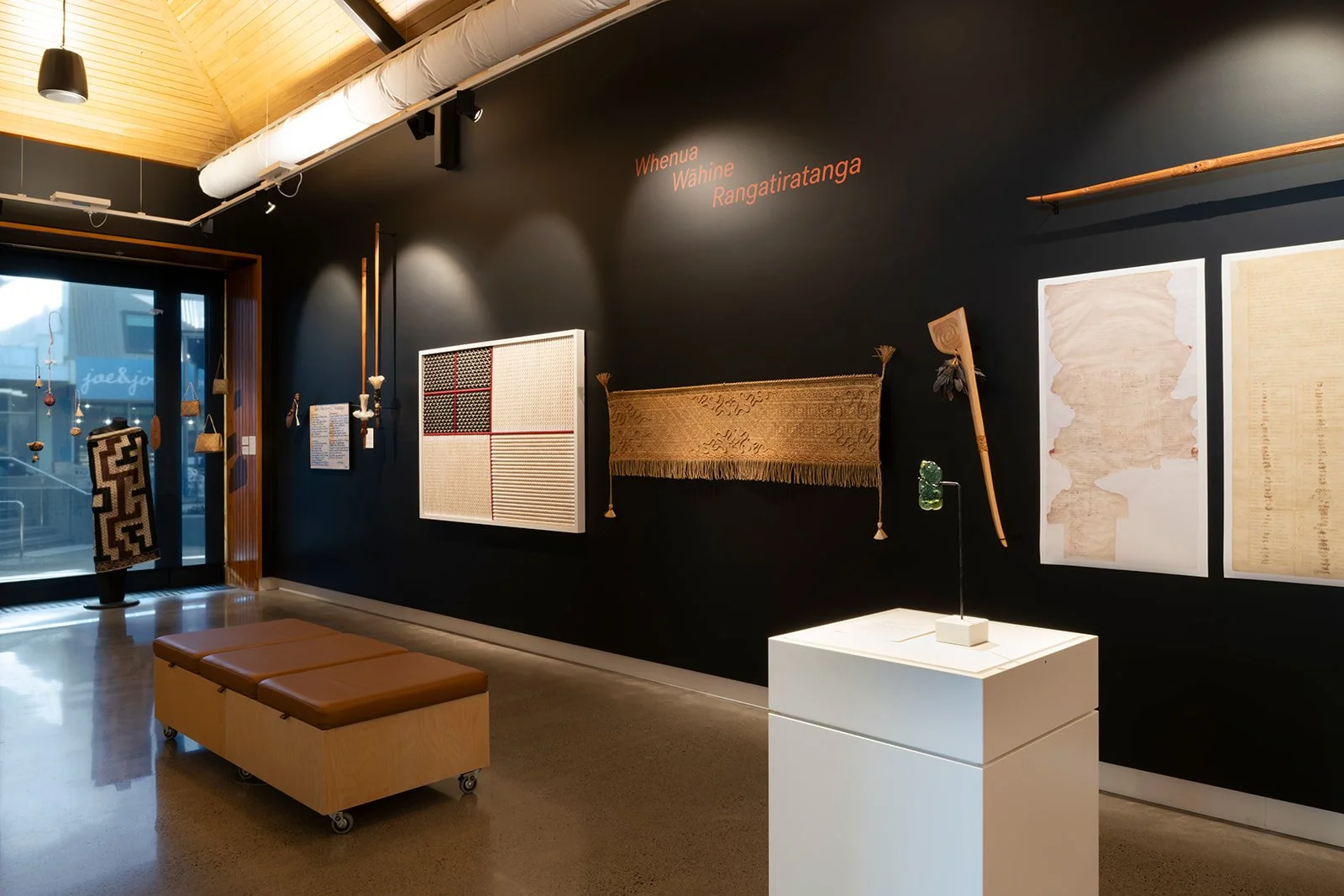

Surrounding these taonga are other toi responses from artists, many being from Ngāti Toa, Te Āti Awa ki Whakarongotai and Ngāti Raukawa, but also includes others, such as Neke Moa (Ngāti Kahungunu ki Ahuriri, Kai Tahu, Ngāti Porou, Ngāti Tūwharetoa), a pounamu carver, and Ranea Aperahama (Ngāti Tūwharetoa, Muriwhenua, Mōrehu) who is a celebrated carver, performer and te reo Māori waiata composer.
The spark for the show came years earlier during a 25th-anniversary event for the whare tūpuna Te Heke Mai Raro, at Hongoeka Marae in 2022. Kohai recalls sitting in the whare listening to Miria Pomare speak about Kahe and Topeora while presenting their taonga.
"I felt so fortunate and humbled to be there in our whare, full of our Hongoeka whānau. I remember thinking the kōrero and taonga that spoke strongly to mana wāhine could be shared more widely - I held on to that thought,” reflects Kohai.
It was when Kohai became Kairauhī Toi (Curator) at Toi MAHARA that the idea to do an exhibition about Kahe-te-Rau o te Rangi and Te Rangitopeora emerged again.
“I didn’t begin that exhibition straight away. I warmed into the role, being my first formal curatorial position in a gallery and before then, I had only curated contemporary Māori art exhibitions, but never taonga,” she says.
She admits that the choice to do the exhibition in an election year was to have Te Tiriti and the two wāhine rangatira of Kāpiti as signatories be its central focus.
“It was to bring attention to Te Tiriti and what it means to all people of Aotearoa,” she says.
Over the next two to three years, Kohai says working with Miria offered profound learning and insight into the physical and spiritual dimensions of kaitiakitanga in a broader sense than just the taonga themselves.
“I wanted to approach the exhibition differently by breaking away from old museum frameworks that kept taonga static and in many ways isolated from the present, disconnected from people and from the whenua,” says Kohai.
“New Zealand’s early museum history was much like other colonised countries where indigenous objects were collected and sought after because the race – our Māori race – was presumably becoming extinct. Our taonga were stored away and placed in cases to preserve ‘what once was’. This exhibition of taonga and contemporary toi together, is to the contrary. I see it as the continuation of our whakapapa, the interconnected past, present and future that says we are still here and always will be.”
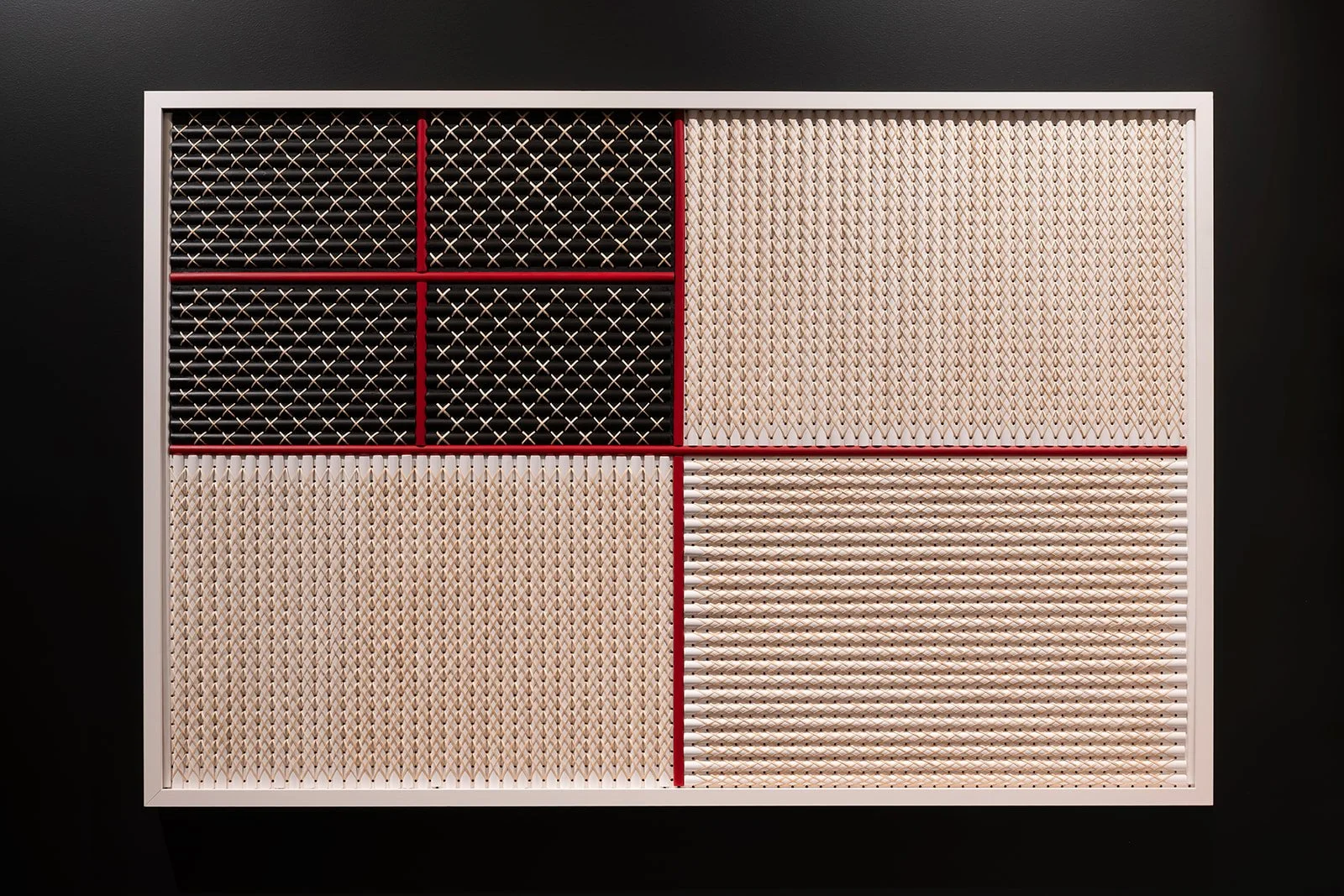
That living continuum shows up in unexpected ways throughout the gallery. In the show, wāhine present whakairo in wood, whalebone, and stone to create weaponry such as tewhatewha, taiaha, kotiate and wahaika (Aimee Porteners and Hariata Ropata-Tangahoe), while tāne contribute intricate woven artforms such as poi tāniko by Karl Leonard, a cloak and raranga piece by Matene Climie, and of course, Ezra’s delicate tāniko mentioned above.




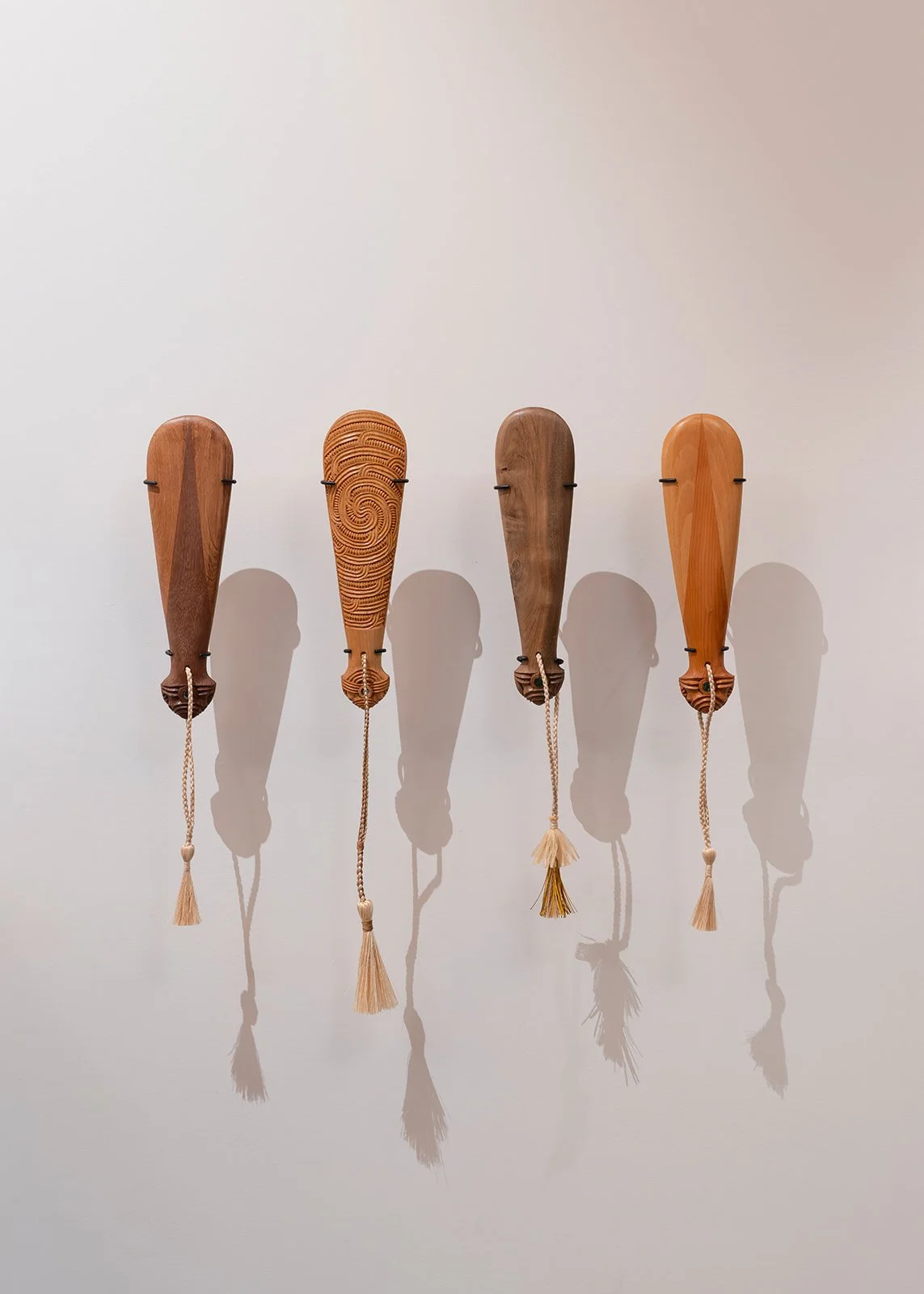
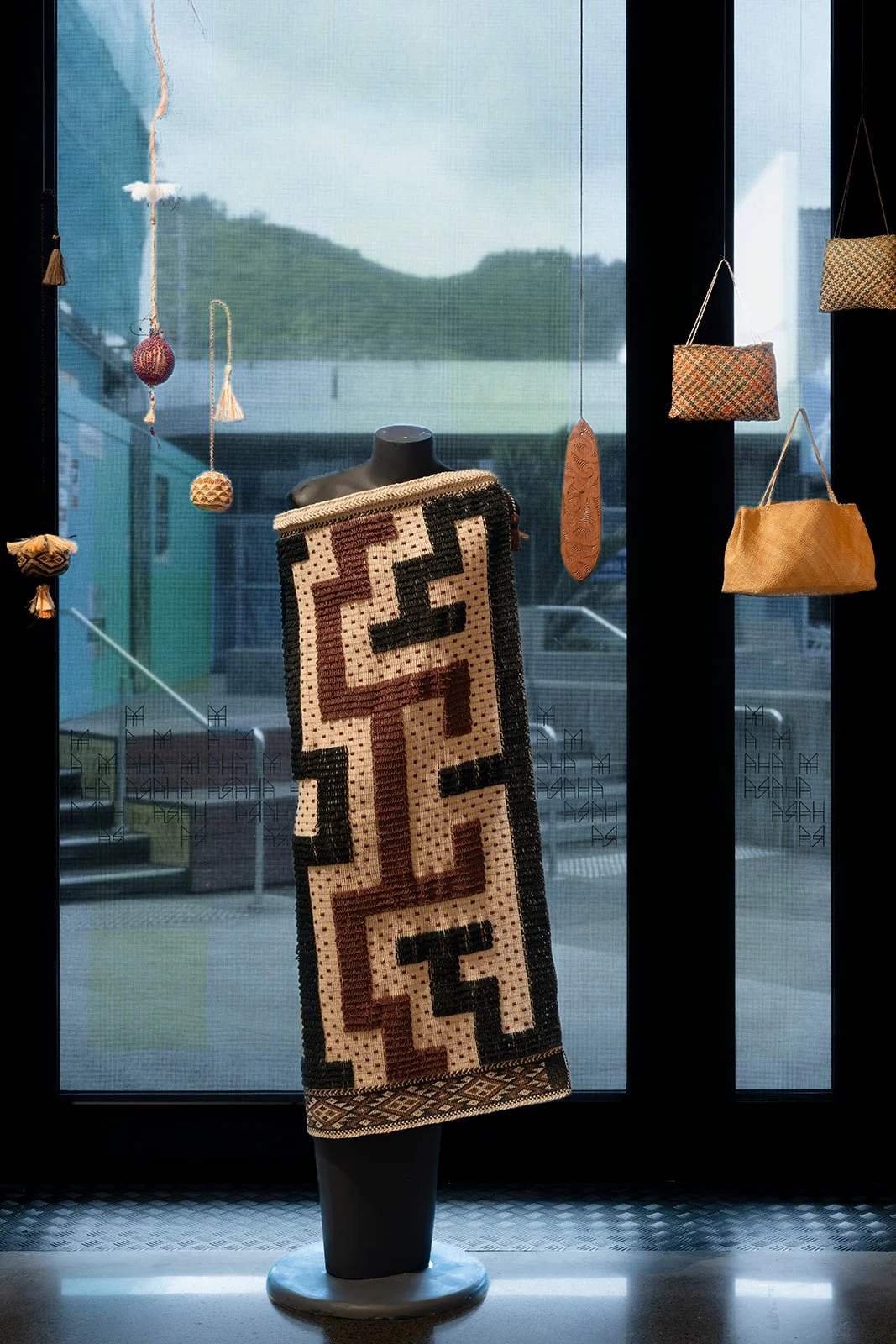
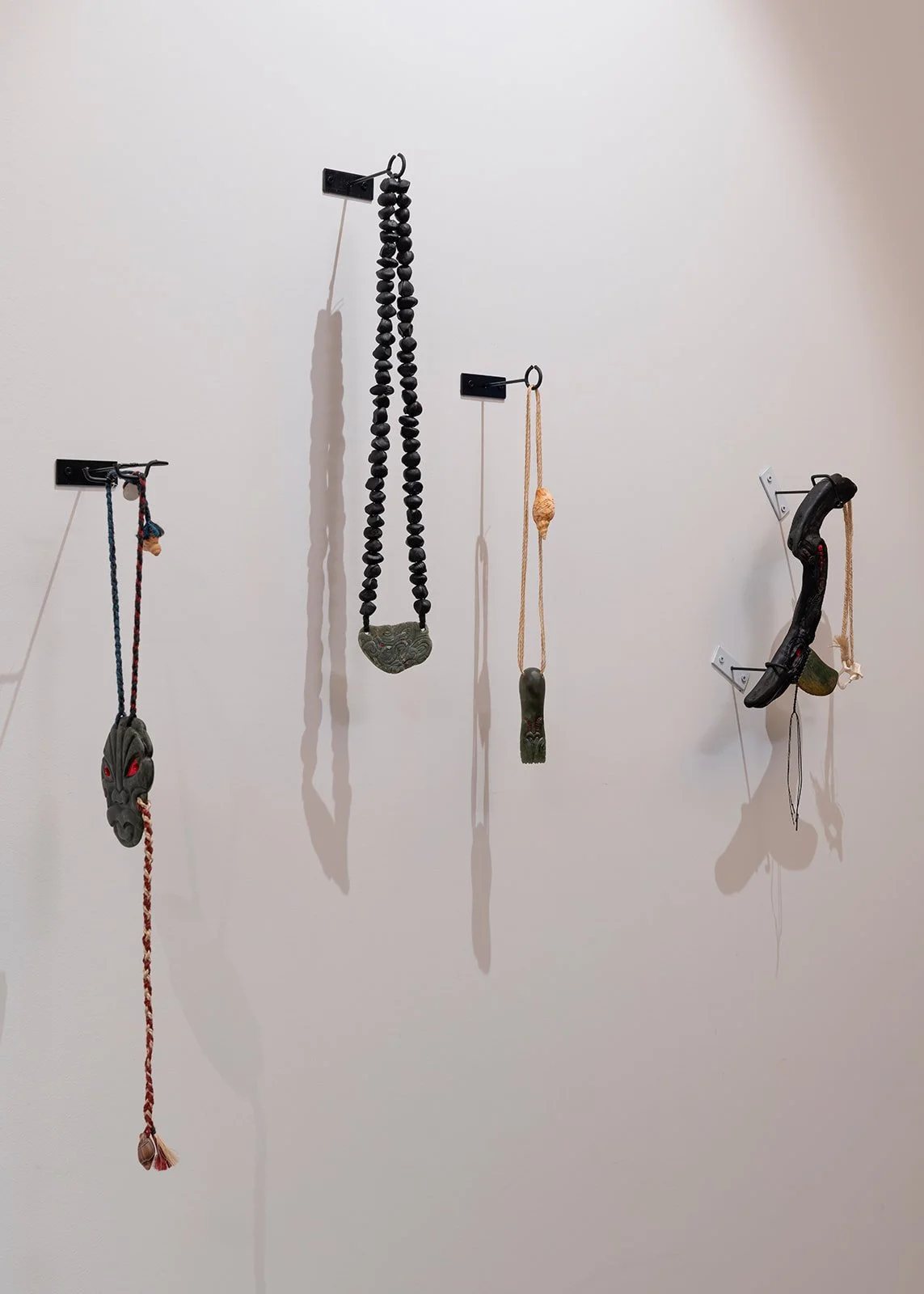
A key piece is a piupiu created in 2000 by artist Elaine Bevan. Elaine researched and reconstructed the garment from a disintegrating piupiu that belonged to her great-great-grandmother, Hēni Te Whiwhi (mokopuna of Te Rangitopeora). Elaine taught herself how to replicate the distinctive poutama-like pattern and muka ‘looped’ waistband. When Elaine completed and displayed the work, audiences commented that it looked modern, very contemporary, unknown to them that it was a reconstruction of an ancestral taonga.
“That piupiu, and everything else made by our tūpuna back then was contemporary in their time. And the toi created today will be the taonga of the future. These artists’ mokopuna will be able to say, ‘my great-grandmother made that piupiu, and it has a whakapapa,” says Kohai.
Kohai says she included contemporary toi alongside the taonga to show how traditional foundations continue to shape and sustain Māori visual language.
“Together, the works make powerful political statements about reclaiming, restoring and revitalising our mātauranga, whakapapa, tikanga and te reo rangatira. To continue the art traditions of our tūpuna is to continue to be innovate, to evolve and importantly capture the artist’s present time and place,” says Kohai.
Kohai has enjoyed working with the artists’ pieces that showcase the skill, creative flair, flow and rhythm of their mahi with their own distinctive tikanga and styles - an approach that resonates strongly with younger visitors. When hosting local tamariki or taiohi groups, Kohai prefers not to talk much, but instead lets them spend time with the taonga and toi, listening to their own narratives of the works.
“I ask them to choose a piece in the exhibition, to stand by it and say why they like it. It’s always surprising and is very fulfilling to hear from tamariki. One stood before the handwritten poem on harakeke paper (Ranea Aperahama) and declared ‘It's a masterpiece!’” Kohai relays.
Another was drawn to Kahe’s intricate, carved heru, choosing it because ‘It looks so different. It has a face’, then carefully studying its detail before spending the afternoon sketching it from memory. Another chose a work by Neke Moa, primarily made of pounamu and driftwood - ‘I like the shadow’, he said. ‘It looks like a whale’ - to which Kohai affirmed, ‘That’s because it is a whale!’
The gallery has experienced an influx of tangata whenua visitors thanks to the thought-provoking exhibition, and a highlight has been having local school groups visit the wāhine rangatira they learned about in history lessons. During the Kapakapanui School group visit, students stood in the gallery amongst the taonga and sang their school song that references Kahe te Rau o te Rangi, widely known throughout Kāpiti to be the one that swam from Kāpiti Island to the mainland with her baby strapped to her back, and wearing the very hei tiki – Kai Arero – that is displayed in the exhibition.
Land, Women and Rangatiratanga runs at Toi MAHARA in Waikanae until 1 November 2026. Entry is free.